 English▼



- 電子メール : David@tmaxcn.com
- 電子メール : Davidtmaxcn@gmail.com
- : No. 39, Xinchang Road, Xinyang, Haicang Dist., Xiamen, Fujian, China (Mainland)
ブログ
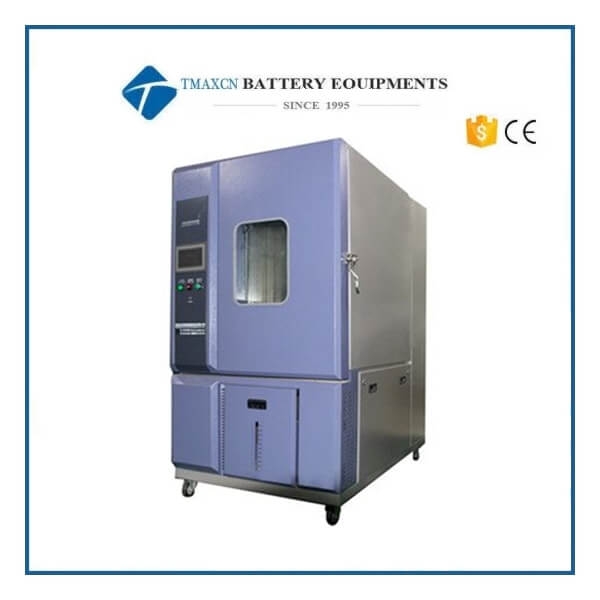
Climate Test Chamber
December 19,2025.
Xiamen Tmax Battery Equipments Limited was set up as a manufacturer in 1995, dealing with lithium battery equipments, technology, etc. We have total manufacturing facilities of around 200000 square foot and more than 230 staff. Owning a group of experie-nced engineers and staffs, we can bring you not only reliable products and technology, but also excellent services and real value you will expect and enjoy.
A climate test chamber is a specialized device used to simulate various environmental conditions, such as temperature, humidity, pressure, and other climatic factors. These chambers are essential for testing the performance, reliability, and durability of products, materials, and systems under controlled and extreme conditions. By replicating realworld environments, climate test chambers help ensure that products can withstand the challenges they may face during their lifecycle.
In this article, we will explore the design, operation, advantages, challenges, and applications of climate test chambers.
●Design and Operation of Climate Test Chambers
1. Key Components
Chamber Enclosure: A sealed, insulated enclosure that isolates the test environment from external influences.
Temperature Control System: Uses heaters, coolers (e.g., refrigeration systems), and fans to regulate temperature.
Humidity Control System: Employs humidifiers and dehumidifiers to manage moisture levels.
Pressure Control System: Adjusts atmospheric pressure for altitude or vacuum simulations.
Control Unit: Monitors and regulates all parameters, ensuring precise conditions throughout the test.
Safety Features: Prevents overheating, freezing, or other hazardous conditions during operation.
2. Operation Principle
The chamber creates and maintains specific environmental conditions by controlling temperature, humidity, pressure, and other factors.
Products or materials are placed inside the chamber, where they are exposed to simulated conditions for extended periods.
Sensors continuously monitor the environment and provide feedback to the control system for adjustments as needed.
●Types of Climate Test Chambers
1. Temperature Chambers:
Focus on simulating high and low temperatures to test thermal endurance.
2. Humidity Chambers:
Simulate varying levels of humidity to assess resistance to moisturerelated issues like corrosion or mold growth.
3. Thermal Shock Chambers:
Rapidly switch between extreme hot and cold conditions to evaluate thermal shock resistance.
4. Altitude Chambers:
Simulate lowpressure environments to test products designed for highaltitude or aerospace applications.
5. Salt Spray Chambers:
Expose products to corrosive saltladen atmospheres to assess their resistance to rust and degradation.
6. UV Aging Chambers:
Simulate prolonged exposure to ultraviolet light to test resistance to sunlightinduced aging.
7. Rain/Spray Test Chambers:
Replicate rainfall or water spray conditions to evaluate waterproofing and weatherproofing capabilities.
●Advantages of Climate Test Chambers
1. Precise Control:
Enables accurate replication of environmental conditions, ensuring reliable and repeatable test results.
2. Versatility:
Capable of simulating a wide range of climates, from arctic cold to tropical heat and everything in between.
3. CostEffectiveness:
Identifies potential failures early in the development process, reducing costly redesigns or recalls.
4. Safety Assurance:
Ensures products meet safety and performance standards under extreme conditions.
5. Customizability:
Configurable settings allow testing tailored to specific industries, materials, or applications.
●Challenges in Using Climate Test Chambers
1. Initial Investment:
High upfront costs for purchasing and installing the equipment.
2. Energy Consumption:
Operating climate test chambers, especially those with extreme conditions, can be energyintensive.
3. Maintenance Requirements:
Regular calibration and maintenance are necessary to ensure accuracy and longevity of the chamber.
4. Size Limitations:
Larger products may require oversized chambers, which can be expensive and technically challenging.
5. Complexity:
Advanced chambers with multiple environmental controls can be complex to operate and require skilled personnel.
●Innovations in Climate Test Chambers
To address these challenges and enhance performance, manufacturers are incorporating cuttingedge technologies:
1. Advanced Control Systems:
Realtime monitoring and dynamic adjustment of environmental parameters for optimal results.
2. Energy Efficiency:
Improved insulation, refrigeration systems, and power management to reduce energy consumption.
3. IoT Integration:
Connectivity to smart systems for remote monitoring, data logging, and predictive maintenance.
4. Modular Designs:
Flexible configurations allow users to adapt chambers to different sizes and applications.
5. EcoFriendly Solutions:
Use of environmentally friendly refrigerants and materials to minimize ecological impact.
●Applications of Climate Test Chambers
Climate test chambers are widely used across various industries:
1. Automotive:
Testing vehicles, components, and materials for performance under diverse weather conditions.
2. Electronics:
Evaluating electronic devices for thermal stability, humidity resistance, and durability.
3. Aerospace:
Simulating highaltitude and extreme temperature conditions for aircraft and spacecraft components.
4. Medical Devices:
Ensuring the reliability and safety of medical equipment under various environmental scenarios.
5. Construction Materials:
Assessing the longterm performance of building materials exposed to weathering and corrosion.
6. Consumer Goods:
Verifying the robustness of household appliances, clothing, and other products under everyday conditions.
7. Renewable Energy:
Testing solar panels, wind turbines, and batteries for resilience in harsh climates.
●The Future of Climate Test Chambers
As technology advances, climate test chambers will become even more sophisticated. Key trends shaping the future include:
1. Increased Automation:
Fully autonomous systems will optimize test sequences and reduce human intervention.
2. Focus on Sustainability:
Ecofriendly designs and energyefficient operations will become standard.
3. Integration with Emerging Technologies:
Combining climate testing with AI, IoT, and cloud computing for smarter diagnostics and analysis.
4. Development of New Materials:
Adapting chambers to accommodate advanced materials and coatings for nextgeneration products.
5. Global Standards Compliance:
Ensuring compatibility with evolving international regulations for product testing.
●Conclusion
Climate test chambers are indispensable tools for ensuring the performance, reliability, and safety of products across industries. Their ability to simulate realworld environments makes them critical for quality assurance, research, and development.
What excites you most about the role of climate test chambers in advancing product testing and innovation? Share your thoughts below! Together, let’s explore how these innovative tools can shape the future of environmental simulation and testing.
 +86 13174506016
 David@tmaxcn.com

